Projects
A collection of architectural projects exploring various concepts, from public spaces to residential designs.
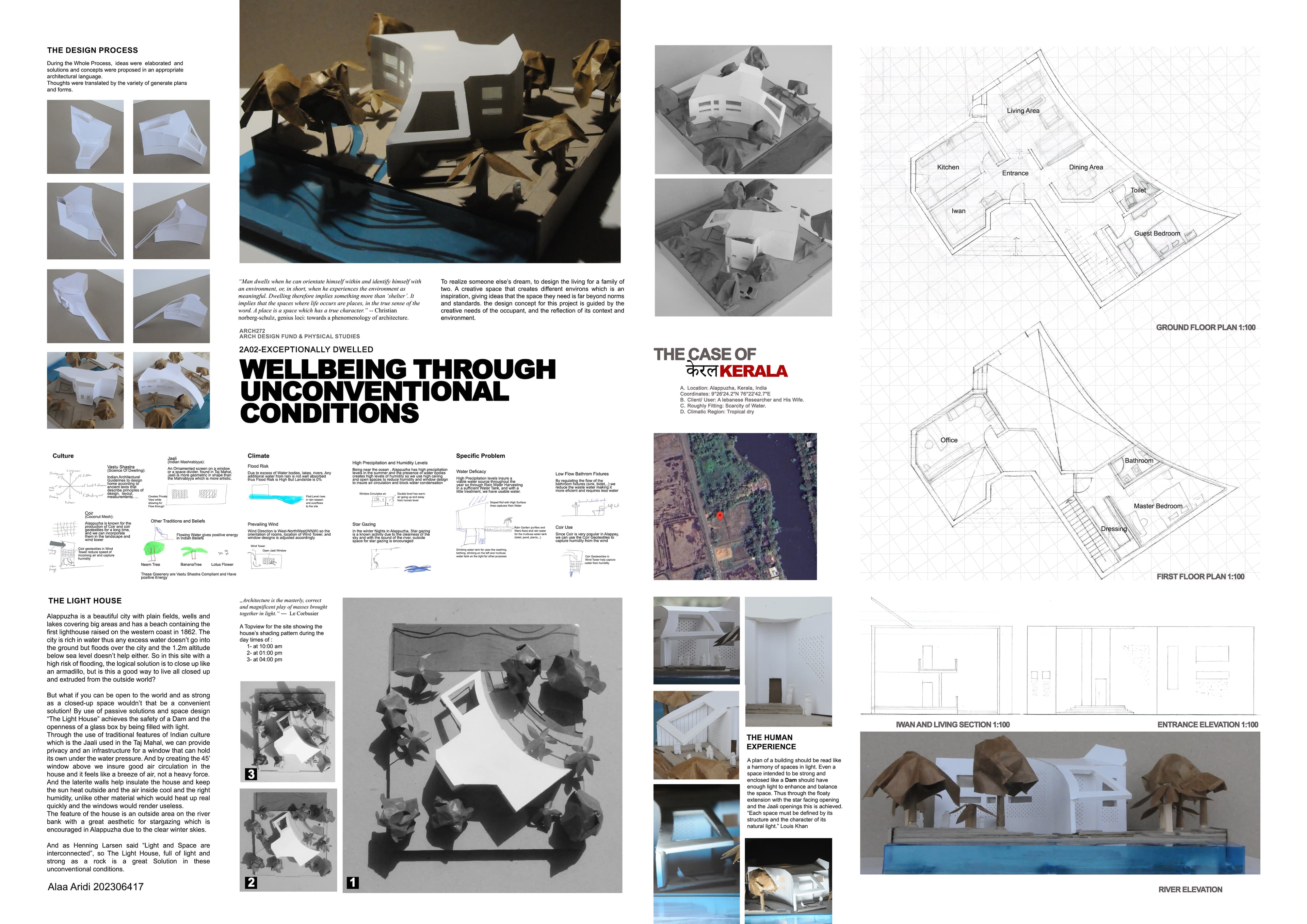
The Light House
Damour, Lebanon
The Light House project represents a modern interpretation of maritime architecture, designed to serve both functional and cultural purposes along Lebanon's Mediterranean coastline. This iconic structure combines traditional lighthouse functionality with contemporary design principles, creating a landmark that guides vessels while serving as a cultural destination for visitors. The design emphasizes the relationship between land and sea, incorporating sustainable materials and energy-efficient lighting systems. The lighthouse features observation decks at multiple levels, offering panoramic views of the Mediterranean Sea and the Lebanese coastline. The interior spaces include a maritime museum, visitor center, and educational facilities that celebrate Lebanon's rich maritime heritage. The structure's form is inspired by the natural rock formations found along the coast, creating a harmonious dialogue between built and natural environments.
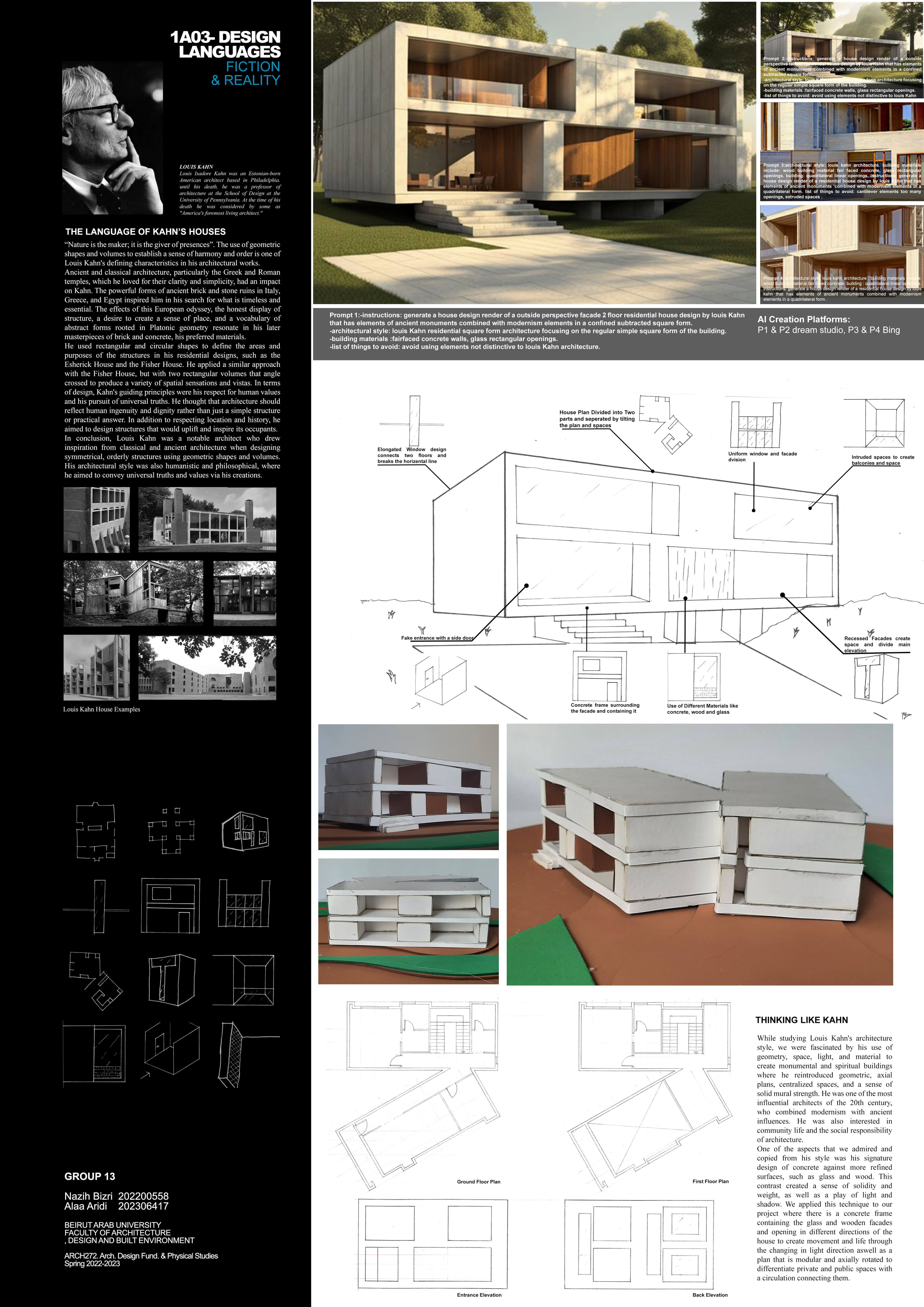
Thinking Like Kahn
Beirut, Lebanon
Thinking Like Kahn is an architectural exploration that pays homage to the legendary architect Louis Kahn's philosophy and design principles. This project reimagines a cultural center in Beirut through Kahn's distinctive approach to light, materiality, and spatial composition. The design features monumental geometric forms with carefully orchestrated light wells that transform throughout the day, creating what Kahn called "silence and light." The building employs a thoughtful material palette of exposed concrete, brick, and wood that celebrates their inherent qualities and natural imperfections. Spaces are organized around a central courtyard that serves as both a gathering place and a light source for surrounding rooms. The project incorporates Kahn's concept of "served" and "servant" spaces, clearly differentiating between primary programmatic areas and supporting functions. Each space is designed with consideration for its essential character or "what it wants to be," reflecting Kahn's belief that architecture should reveal the intrinsic nature of its elements.
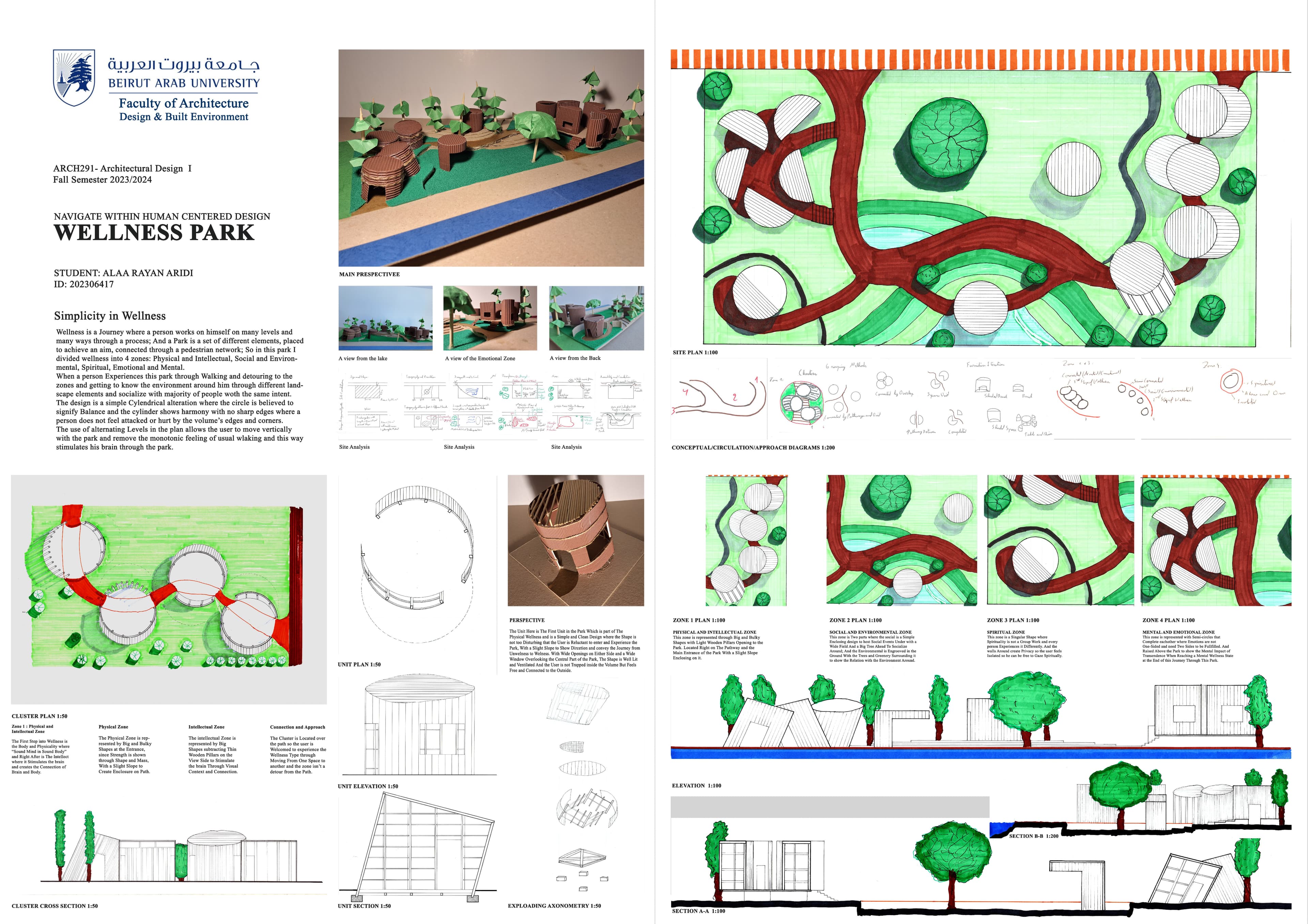
Wellness Park
Beirut, Lebanon
Wellness Park is a holistic urban intervention designed to address the growing need for accessible wellness spaces in Beirut's dense urban fabric. This 5-hectare public park transforms a previously underutilized area into a therapeutic landscape that promotes physical, mental, and social wellbeing for residents of all ages and abilities. The design incorporates evidence-based principles of biophilic design, with diverse native plantings that improve air quality, reduce urban heat island effects, and support local biodiversity. The park features a network of walking and jogging paths with varying intensities, outdoor fitness stations, meditation gardens, and quiet reflection spaces. Water elements, including a series of bioswales and a central pond, provide both aesthetic value and sustainable stormwater management. The park includes community gardens where residents can grow their own food, fostering social connections and promoting healthy eating habits. Flexible gathering spaces accommodate wellness programming such as outdoor yoga classes, tai chi sessions, and community health workshops. The design prioritizes accessibility, ensuring that people of all physical abilities can enjoy the therapeutic benefits of nature.

Farming Kindergarten
Beirut, Lebanon
The Farming Kindergarten represents an innovative approach to early childhood education that integrates agricultural learning with traditional academic curriculum. This pioneering educational facility is designed around the concept that children learn best through direct engagement with nature and hands-on experiences. The building features a series of interconnected pavilions that blur the boundaries between indoor and outdoor learning environments, with each classroom opening directly onto dedicated garden plots where children can plant, tend, and harvest their own vegetables and herbs. The architecture incorporates sustainable design principles including rainwater harvesting systems, solar panels, and natural ventilation strategies that serve as living laboratories for environmental education. The central courtyard houses a greenhouse and composting area where children learn about natural cycles and waste reduction. The design includes flexible learning spaces that can adapt to different group sizes and activities, from quiet reading corners to collaborative project areas. The building's materials palette emphasizes natural, non-toxic finishes that create a healthy environment for young learners while demonstrating sustainable construction practices.

Artist Residency
Beirut, Lebanon
The Artist Residency project creates a dynamic creative ecosystem where artists from diverse disciplines can live, work, and collaborate in the heart of Beirut's cultural district. The design transforms a former industrial building into a vibrant arts center that respects the site's heritage while introducing contemporary interventions. The residency accommodates up to 12 artists simultaneously, with flexible living units that can adapt to different needs and lengths of stay. Each artist is provided with a generously proportioned studio space with abundant natural light, high ceilings, and robust infrastructure to support various artistic practices from painting and sculpture to digital media and performance art. The building is organized around a central atrium that serves as both a gathering space and informal exhibition area, encouraging spontaneous interactions and cross-disciplinary dialogue. Public-facing spaces include a professional gallery, a multipurpose event space, and a café that serves as an interface between the resident artists and the broader community. The design incorporates sustainable features including passive cooling strategies, rainwater collection, and adaptive reuse of existing materials. The residency program is designed to foster connections between international visiting artists and the local creative community, positioning the facility as a catalyst for cultural exchange and urban revitalization.

Community Market
Beirut, Lebanon
The Community Market project reimagines the traditional Middle Eastern souk for contemporary urban life, creating a vibrant marketplace that serves as both a commercial center and social gathering place for the neighborhood. The design draws inspiration from Beirut's historic covered markets while incorporating modern amenities and sustainable technologies. The market is organized around a series of interconnected courtyards that provide natural ventilation and create intimate spaces for different types of vendors and activities. The main hall features a dramatic vaulted ceiling with clerestory windows that flood the space with natural light while protecting vendors and shoppers from the elements. Local artisans, farmers, and food vendors are provided with flexible stall spaces that can be reconfigured for different market days and seasonal events. The design includes a community kitchen where local chefs can prepare fresh meals using ingredients from market vendors, fostering connections between producers and consumers. A rooftop garden provides additional space for urban agriculture and community events while helping to manage stormwater runoff. The market incorporates traditional building techniques and local materials, supporting the local construction industry while creating a sense of place that resonates with the community's cultural identity.

Beirut Art Trails
Beirut, Lebanon
Beirut Art Trails is an innovative urban design project that weaves art and culture into the fabric of the city through a network of curated walking paths. This comprehensive urban intervention transforms underutilized streets, alleys, and vacant lots into a continuous cultural experience that connects Beirut's diverse neighborhoods and cultural institutions. The project features a series of site-specific installations, murals, and interactive sculptures created by local and international artists, turning the city itself into an open-air gallery. The trails are marked by distinctive paving patterns, lighting elements, and wayfinding systems that guide visitors while creating a cohesive visual identity throughout the network. Strategic "art nodes" at key intersections serve as gathering spaces with seating, shade structures, and information about nearby cultural attractions. The project incorporates green infrastructure elements including bioswales, permeable paving, and native plantings that improve the urban environment while creating pleasant walking conditions. Digital components, including an interactive app and QR codes, provide additional information about the artworks and suggest thematic routes based on visitors' interests and available time. The Art Trails project was developed through extensive community engagement, ensuring that the interventions reflect local identity while fostering connections between Beirut's diverse communities.

Design District
Beirut, Lebanon
The Design District project envisions the transformation of a post-industrial neighborhood into a vibrant creative hub that fosters innovation and collaboration across design disciplines. This mixed-use development creates an ecosystem where designers, makers, educators, and the public can interact in a dynamic urban environment. The master plan preserves and adaptively reuses significant industrial buildings while introducing contemporary structures that complement the site's heritage. The district is organized around a central design plaza that hosts exhibitions, fashion shows, and public events throughout the year. The development includes a diverse mix of spaces including design studios, workshops with specialized equipment, co-working facilities, showrooms, and retail spaces that showcase locally-produced design products. Educational components include a design academy offering professional courses and workshops, as well as a materials library and research center that supports sustainable design practices. Residential lofts and short-term accommodations allow designers to live within the creative community, while boutique hotels cater to design tourists and business travelers. The public realm features carefully designed streetscapes, pocket parks, and exhibition spaces that display design work and encourage pedestrian activity. The project implements district-scale sustainability strategies including shared energy systems, water management, and waste reduction programs that demonstrate design's role in addressing environmental challenges.

Roots of Resilience
Beirut, Lebanon
Roots of Resilience is a memorial and community center that honors the strength and perseverance of the Lebanese people in the face of historical challenges, particularly the 2020 Beirut port explosion. The project occupies a site near the blast zone, transforming a damaged area into a place of remembrance, healing, and community gathering. The architecture employs a powerful yet restrained language that balances commemoration with forward-looking optimism. The memorial component features a contemplative garden with a series of sculptural elements that represent different aspects of Lebanese resilience throughout history. Water plays a central role in the design, with reflecting pools that create moments of quiet contemplation while symbolizing renewal and continuity. The community center provides flexible spaces for cultural events, educational programs, and support services that address ongoing community needs. The building incorporates fragments of structures damaged in the explosion, preserving these elements as powerful reminders while integrating them into a new context that speaks to recovery and rebuilding. The landscape design uses native Lebanese plants arranged in patterns inspired by traditional agricultural terracing, connecting the site to the broader cultural landscape. The project was developed through an extensive community engagement process, ensuring that it authentically represents collective memory while serving practical functions for neighborhood residents.